From Photons to People: What Quantum Entanglement Teaches Us About Connection
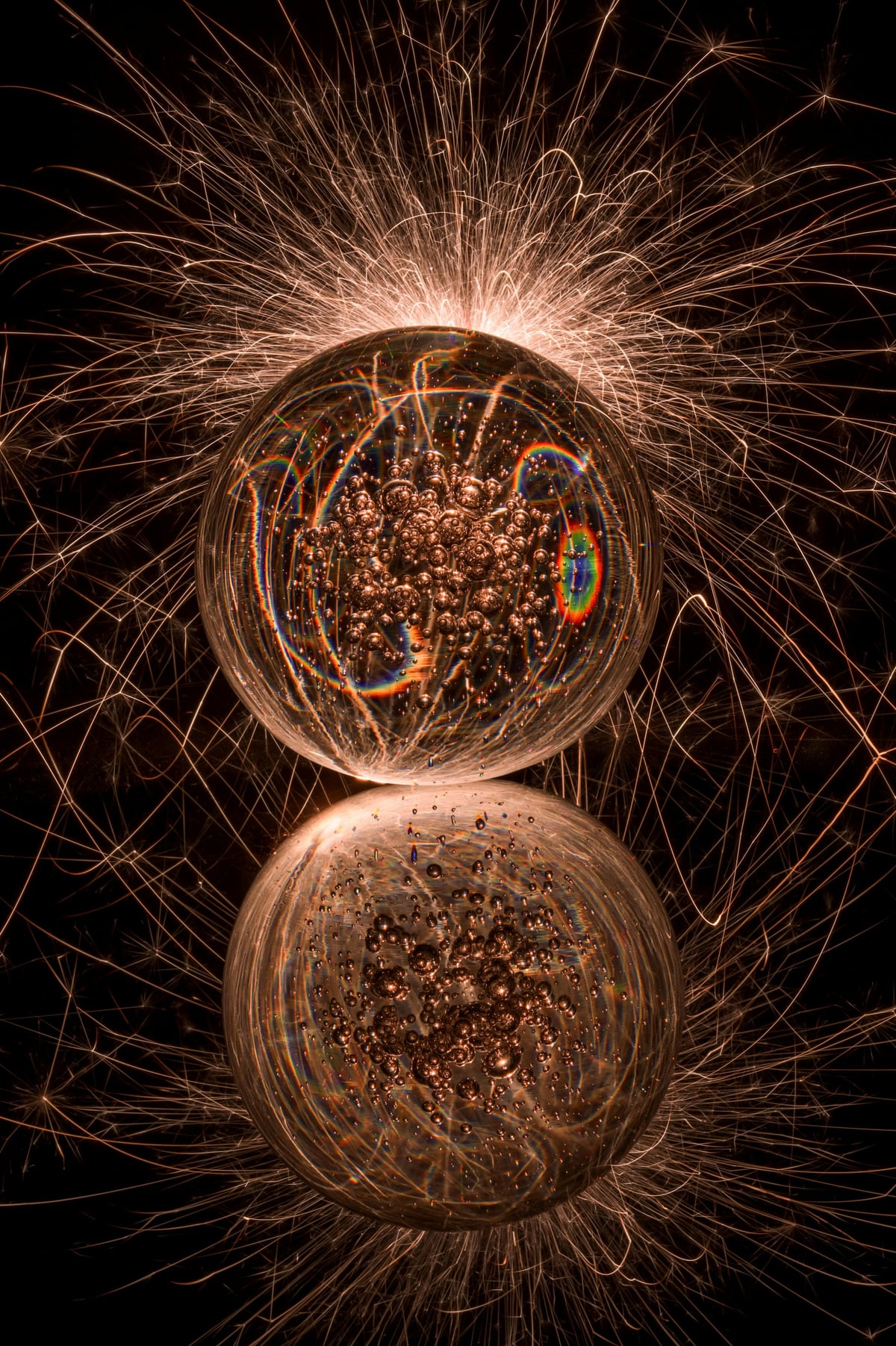
In 1935, Albert Einstein, Boris Podolsky, and Nathan Rosen introduced a paradox that shook physics. Known as the EPR paradox, it described a peculiar phenomenon later called quantum entanglement. Two photons, when created together, seemed to share a fate: a change in one instantly mirrored the other, regardless of distance. Einstein dismissed it as “spooky action at a distance”, yet modern experiments have consistently shown this is real. In 1982, physicist Alain Aspect in Paris conducted the first landmark test confirming entanglement, using pairs of polarized photons (Aspect, Dalibard, & Roger, 1982). Today, entanglement is not just theory - it is the foundation of quantum communication, quantum computing, and even discussions about consciousness. But beyond physics, what does this mean for human beings - for consciousness, energy, and balance?
Quantum Entanglement in Plain Words
Imagine you and a close friend each flip a coin. Normally, the results are independent. But in entanglement, if you flip “heads,” your friend’s coin instantly shows “tails,” no matter how far apart you are. The universe seems to link them.
Entanglement demonstrates that reality is not made of isolated parts but is instead deeply relational. In the same way, our daily lives are full of invisible threads:
-
A mother sensing her child’s distress even from afar.
-
A friend calling you at the exact moment you thought of them.
-
Collective moods that shift entire communities.
While not literal quantum entanglement, these examples mirror the interconnectedness of consciousness and energy.
Consciousness and the Energy of Balance
Physics reminds us that matter and energy are interchangeable (E = mc²). Our thoughts create electromagnetic signals, our emotions shift biochemistry, and our behaviors ripple through our health and relationships.
Biology confirms this through epigenetics. As Bruce Lipton explains in The Biology of Belief (2005), genes are not rigid blueprints but respond to environmental and emotional signals. Just as entangled photons “communicate” instantly, our inner state communicates directly with our biology.
But without balance, this entangled system can become destructive:
-
Chronic stress over-activates cortisol, disrupting immunity.
-
Emotional disconnection creates biochemical disharmony.
-
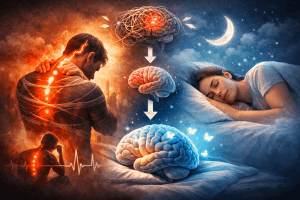
A restless mind weakens the body’s ability to heal.
Balance of body, mind, and soul is not just desirable - it is survival.
Sleep: The Nightly Entanglement Reset
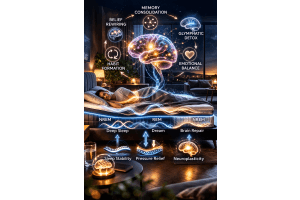
If entanglement shows us everything is connected, sleep is where those connections are restored. During deep sleep:
-
The brain clears toxins through the glymphatic system.
-
Memories reorganize, forming new neural networks (a process of neuroplasticity).
-
Hormones like melatonin, serotonin, and growth hormone re-balance.
Sleep is the laboratory of harmony, ensuring that the entangled networks within us - neurons, hormones, emotions - remain coherent.
This is where NadaUp mattresses step in.
How NadaUp Supports Conscious Connection
NadaUp mattresses were developed with medical-grade foam technology, tested in collaboration with Oxford and Northumbria Universities. Research shows:
-
Users fell asleep 29% faster and improved sleep efficiency by 7%.
-
Cooling technology dissipates heat 69% faster, preventing restlessness.
-
Pressure relief improved by 60%, reducing muscle tension.
By improving hormonal balance (melatonin up, cortisol down), NadaUp helps align the body’s energetic signals. It creates a cleaner, restorative environment - a nightly reset for the “entangled web” of health, emotions, and consciousness.
NadaUp is not just a back pain relief mattress or a clinically tested mattress; it is a tool of conscious living, a bridge between science and balance.
Future Research: Entanglement and the Human Soul
Where might this science lead?
-
Quantum Biology: exploring if entanglement plays a role in photosynthesis, navigation in birds, or even human brain processes (Lambert et al., 2013).
-
Consciousness Studies: could entanglement explain intuition, empathy, or non-local communication?
-
Medicine: quantum information theory may revolutionize diagnosis and healing, linking energy fields to biology.
Philosopher-physicist David Bohm argued in Wholeness and the Implicate Order (1980) that reality is an unfolding whole, where separation is an illusion. If true, future science may confirm what mystics long suggested: we are entangled with the universe itself.
And if human well-being depends on coherence and harmony, then sleep - supported by innovations like NadaUp - may be the very foundation of humanity’s quantum future.
Conclusion: Living Entangled
From photons to people, entanglement whispers the same truth: we are never separate.
-
Our biology responds to our inner states.
-
Our emotions ripple into our communities.
-
Our consciousness may connect us across distances we cannot yet measure.
To live well is to live in balance - body, mind, and soul. Sleep is the starting point. And NadaUp, rooted in both science and philosophy, is here to support that nightly reset.
Because when we rest consciously, we live consciously.
NadaUp – Every Night Matters.
References
-
Einstein, A., Podolsky, B., & Rosen, N. (1935). Can Quantum-Mechanical Description of Physical Reality Be Considered Complete? Physical Review, 47(10), 777.
-
Aspect, A., Dalibard, J., & Roger, G. (1982). Experimental Test of Bell's Inequalities Using Time‐Varying Analyzers. Physical Review Letters, 49(25), 1804.
-
Bohm, D. (1980). Wholeness and the Implicate Order. Routledge.
-
Lipton, B. (2005). The Biology of Belief. Hay House.
-
Lambert, N. et al. (2013). Quantum biology. Nature Physics, 9(1), 10–18.
-
NadaUp Research. (2024). Clinical testing reports and product data. Northumbria University & Oxford University.