Neuroplasticity at Night: Why Quality Sleep Builds a Smarter, Healthier You

Every night, while your body lies still, your brain is far from inactive. It runs an invisible night shift that rewires, repairs, and reshapes itself. This extraordinary ability is called neuroplasticity - the brain’s capacity to change its structure and function throughout life. Unlike a machine with fixed parts, the human brain is dynamic, adapting continuously to experiences, learning, and challenges. For centuries, it was believed that the adult brain was rigid, set in its pathways after childhood. But groundbreaking neuroscience research has shown the opposite: the brain is capable of lifelong adaptation. And one of the most critical factors fueling this change is not more effort or endless study, but something far simpler - sleep.
What Is Neuroplasticity and Why Does It Matter?
Neuroplasticity refers to the brain’s ability to reorganize itself by forming new neural connections. This process allows us to learn new skills, recover from injuries, adapt to changing environments, and even reshape old habits.
Think of your brain like a vast forest. Every thought, action, or experience is like walking a path through it. The more often you walk that path, the clearer and easier it becomes. Neuroplasticity is the forest’s ability to grow new paths or change old ones, ensuring that the mind remains flexible and resilient.
Why is this important? Because without neuroplasticity, human beings would be stuck with their first instincts and childhood skills. It is this adaptability that allows a stroke patient to relearn how to speak, a musician to perfect a new instrument, or a student to master a difficult subject.
How Does Neuroplasticity Work?
Synaptic Changes
At the core of neuroplasticity are synapses - the connections between neurons. Every time you learn or recall something, synaptic strength changes. Stronger synapses make it easier for signals to travel, much like a frequently used road becomes smoother over time.
Structural and Functional Adaptation
Beyond strengthening synapses, the brain also undergoes structural adaptation. New dendrites (branches of neurons) grow, and in some cases, new neurons themselves appear. Functional adaptation happens when different parts of the brain take over roles once dominated by damaged regions, a phenomenon often seen in recovery from brain injuries.
Neurogenesis
For years, scientists believed adults could not grow new neurons. Today, we know that neurogenesis - the creation of new brain cells - occurs, especially in the hippocampus, the area responsible for learning and memory (Eriksson et al., 1998).
What Elevates Neuroplasticity?
Neuroplasticity is not random; it responds to stimulation and practice.
-
Learning: Each time you acquire a new skill - whether it’s playing piano or learning a language - your brain reshapes itself.
-
Practice: Repetition deepens synaptic changes, turning conscious effort into unconscious mastery.
-
Experience: Environments rich in novelty and challenge drive brain rewiring. Even social interactions and emotional experiences shape plasticity.
-
Physical Activity: Exercise increases brain-derived neurotrophic factor (BDNF), a protein that supports neuron survival and growth (Cotman & Berchtold, 2002).
The Benefits of Neuroplasticity
-
Learning and Memory – Without plasticity, memory could not be consolidated. Each night, new information is integrated into long-term storage through synaptic reorganization.
-
Recovery from Injury – Patients with brain injuries often recover abilities because other brain regions “rewire” to take over lost functions.
-
Cognitive Fitness – Neuroplasticity helps preserve mental sharpness, reducing the risk of age-related decline.
-
Adaptation to New Situations – From navigating a new city to coping with unexpected challenges, plasticity equips us with flexibility.
Sleep: The Brain’s Greatest Tool for Neuroplasticity
Here lies the heart of the matter: neuroplasticity thrives on sleep. Without quality rest, the brain’s rewiring process is incomplete.
How Sleep Supports Neuroplasticity
-
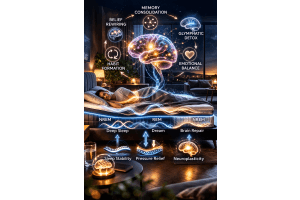
Memory Consolidation – During slow-wave sleep, the brain transfers short-term memories into long-term storage. Without this step, learning fades quickly (Walker & Stickgold, 2006).
-
Synaptic Homeostasis – According to the Synaptic Homeostasis Hypothesis, sleep helps “prune” unnecessary synapses and strengthen essential ones, keeping the brain efficient (Tononi & Cirelli, 2014).
-
Neurogenesis Enhancement – Sleep promotes the release of growth hormones that support neurogenesis and synaptic repair.
-
Emotional Processing – REM sleep allows emotional experiences to be integrated and resolved, shaping resilience and adaptability.
How Much Sleep Is Needed?
Research suggests that 7–9 hours per night is optimal for adults (Hirshkowitz et al., 2015). Less than this reduces memory consolidation, increases stress hormones, and disrupts neuroplastic repair. Chronic sleep deprivation has been shown to impair learning and reduce hippocampal neurogenesis.
An Example: The Everyday Learner
Imagine someone trying to learn guitar after work. Each evening, they practice chords and finger patterns. The effort feels clumsy at first, but after a night of deep sleep, something changes. The next day, movements feel smoother. Why? Because during sleep, the brain has rewired itself, strengthening synapses involved in motor memory.
This invisible nighttime labor is what makes growth possible. Without sufficient rest, the brain would struggle to integrate new patterns, leaving learning incomplete.
NadaUp and the Nighttime Brain
While neuroplasticity is primarily a biological process, it depends heavily on the quality of sleep we provide our brains. Poor sleep - interrupted by discomfort, overheating, or restlessness - hinders the brain’s ability to repair itself.
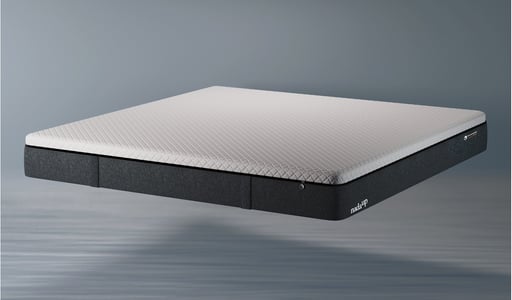
NadaUp mattresses, crafted with Medical Grade™ foam, offer the optimal environment for deep, restorative sleep. Their design relieves pressure, aligns the spine, and regulates temperature, ensuring uninterrupted rest. Clinical testing has shown improvements in sleep efficiency, faster sleep onset, and better recovery.
In essence, NadaUp does more than support the body; it indirectly nurtures the brain by creating conditions for neuroplasticity to flourish. After all, when the body is supported and the mind at ease, the brain can carry out its quiet work of reshaping, repairing, and renewing.
Conclusion: Sleeping Your Way to a Smarter Brain
Neuroplasticity is not a miracle reserved for the young; it is the brain’s lifelong gift. Yet, it is fragile - demanding proper conditions, especially sleep, to function fully. Every night offers us a chance to become sharper, more resilient, and more adaptable.
By investing in both daily practices that encourage plasticity and in the quality of our sleep environment, we give our brains the best chance to thrive. In this light, choosing the right mattress is not a matter of luxury but of biological necessity. With NadaUp, you are not just lying down - you are giving your brain the space it needs to grow new pathways and shape a brighter tomorrow.
References
-
Cotman, C. W., & Berchtold, N. C. (2002). Exercise: A behavioral intervention to enhance brain health and plasticity. Trends in Neurosciences, 25(6), 295–301. https://doi.org/10.1016/S0166-2236(02)02143-4
-
Eriksson, P. S., Perfilieva, E., Björk-Eriksson, T., Alborn, A. M., Nordborg, C., Peterson, D. A., & Gage, F. H. (1998). Neurogenesis in the adult human hippocampus. Nature Medicine, 4(11), 1313–1317. https://doi.org/10.1038/3305
-
Hirshkowitz, M., Whiton, K., Albert, S. M., Alessi, C., Bruni, O., DonCarlos, L., ... & Adams Hillard, P. J. (2015). National Sleep Foundation’s sleep time duration recommendations: methodology and results summary. Sleep Health, 1(1), 40–43. https://doi.org/10.1016/j.jshe.2014.12.010
-
Tononi, G., & Cirelli, C. (2014). Sleep and the price of plasticity: From synaptic and cellular homeostasis to memory consolidation and integration. Neuron, 81(1), 12–34. https://doi.org/10.1016/j.neuron.2013.12.025
-
Walker, M. P., & Stickgold, R. (2006). Sleep, memory, and plasticity. Annual Review of Psychology, 57, 139–166. https://doi.org/10.1146/annurev.psych.56.091103.070307
-
NadaUp. (2023). Every Night Matters – UK Product Information. Internal presentation