Why Sleep Is the Only Moment When All Four Pillars Return to Balance
We live in an age of constant stimulation. Decisions, deadlines, conversations, screens, noise, responsibilities — all compete for attention. During the day, our body adapts. It compensates. It pushes forward.
But there is only one moment in every 24 hours when the body is not performing for the world. Only one phase when the nervous system stops defending, the emotions stop reacting, memory stops collecting, and hormones stop chasing stress.
That moment is sleep.
Sleep is not simply “rest.” It is the only biological state in which the four essential pillars of human functioning can return to equilibrium:
-
The Nervous System
-
Emotional Regulation
-
Memory and Identity Integration
-
Hormonal Rhythmicity
When these four pillars align, clarity emerges. When one pillar weakens, the others destabilize. And when sleep is compromised, the entire structure begins to tilt.
This article explores how sleep acts as the master regulator of balance — and why the physical sleep environment, particularly the mattress, becomes the gateway to full regeneration.
Introduction to the Series: The Architecture of Inner Stability
Throughout this series, we have explored the foundations of well-being — physical resilience, emotional coherence, cognitive flexibility, and existential clarity.
But beneath all of these lies a deeper organizing principle: sleep.
Neuroscientist Matthew Walker describes sleep as “the single most effective thing we can do to reset our brain and body health each day” (1). Without it, the architecture of stability collapses slowly and silently.
Imagine a generalised example:
A person wakes up already tired. They drink coffee to compensate. Their nervous system remains in low-grade alertness throughout the day. Small inconveniences feel larger than they should. Concentration slips. Memory falters. By evening, cortisol is still elevated. Sleep comes late and is fragmented.
This pattern repeats.
At first, it feels manageable. Over time, it reshapes mood, relationships, decisions, and even identity.
Why?
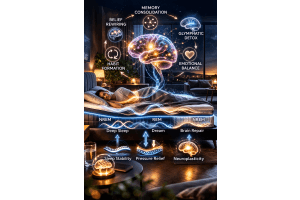
Because each of the four pillars depends on deep sleep for recalibration.
1. How Sleep Resets the Nervous System
The nervous system operates in two primary modes: sympathetic (activation) and parasympathetic (recovery). During the day, sympathetic tone dominates — we respond, adapt, act.
At night, especially during slow-wave sleep, parasympathetic activity increases significantly, lowering heart rate, reducing blood pressure, and calming neural firing patterns (2).
Research shows that sleep deprivation heightens amygdala reactivity by up to 60%, making emotional responses more exaggerated (3). Without sleep, the brain’s “alarm system” becomes hypersensitive.
During deep sleep, however:
-
Heart rate variability improves.
-
Vagal tone increases.
-
Cortisol declines.
-
Neural excitability stabilizes.
This is not psychological. It is measurable physiology.
When someone sleeps poorly for several nights, they often describe feeling “on edge.” That phrase is biologically accurate. The nervous system has not completed its reset cycle.
Sleep is the only daily state where the nervous system can fully disengage from environmental demands and restore autonomic balance.
2. How Sleep Reorganises Emotions
Emotions are not just feelings; they are neurochemical events.
REM sleep, in particular, plays a central role in emotional processing. During REM:
-
The brain reactivates emotional memories.
-
Noradrenaline levels drop to near zero.
-
Emotional charge is softened while memory content remains (4).
Walker describes REM sleep as overnight therapy — a state in which the brain revisits difficult experiences without the stress chemicals that were present during the original event (1).
In practical terms:
Imagine someone receives critical feedback at work. During the day, the emotional reaction is sharp. If they sleep well, the next morning the event feels less threatening. The memory remains, but the intensity is reduced.
If sleep is disrupted, the emotional charge persists.
Studies confirm that individuals deprived of REM sleep show impaired emotional regulation and increased anxiety (5).
Sleep reorganises emotional memory so that we wake up less reactive and more reflective.
3. How Sleep Integrates Memory and Identity
Sleep does not merely store memories. It reorganizes them.
The hippocampus temporarily holds daily experiences. During slow-wave sleep, memories are gradually transferred to long-term cortical storage — a process called systems consolidation (6).
But beyond factual memory lies something deeper: identity.
When experiences are integrated into existing memory networks, they reshape self-perception. A failure becomes a lesson. A conversation becomes insight. A mistake becomes adjustment.
Without sleep, this integration is fragmented.
Research demonstrates that sleep enhances creative problem-solving and insight formation (7). During sleep, the brain forms novel associations that are not apparent during waking cognition.
In a generalised scenario:
A person struggles with a decision during the day. After a full night of sleep, the solution feels clearer — not because new information appeared, but because the brain reorganized existing information more coherently.
Sleep stabilizes identity by weaving experience into narrative continuity.
Without it, the self feels scattered.
4. How Sleep Stabilises Hormonal Rhythms
Hormones operate on circadian timing. Melatonin rises at night. Cortisol peaks in the morning. Growth hormone is released during deep sleep. Leptin and ghrelin regulate appetite during nocturnal cycles.
Disrupted sleep disrupts this orchestration.
Studies show that even partial sleep restriction can:
-
Increase evening cortisol levels (8)
-
Reduce insulin sensitivity (9)
-
Alter leptin/ghrelin balance, increasing hunger (10)
Hormonal instability affects mood, metabolism, immune function, and cardiovascular health.
When sleep is deep and continuous:
-
Melatonin secretion remains robust.
-
Cortisol follows its natural diurnal rhythm.
-
Growth hormone supports tissue repair.
-
Inflammatory markers decline.
Sleep is not passive; it is an endocrine recalibration period.
5. How Sleep Shapes Existential Clarity and Direction
Beyond physiology lies something less discussed but equally important: clarity.
Cognitive flexibility, future planning, moral reasoning, and long-term thinking all depend on prefrontal cortex functioning. Sleep deprivation reduces prefrontal activity while amplifying limbic reactivity (3).
When exhausted, decisions become short-term and emotionally driven. Patience declines. Perspective narrows.
Rested individuals demonstrate:
-
Greater impulse control
-
Better long-term planning
-
Improved social judgment
Sleep creates the neurological conditions required for meaning-making.
It does not create purpose — but it stabilizes the mental environment in which purpose becomes visible.
6. What Happens When One Pillar Is Disrupted
These four pillars are interdependent.
If hormonal rhythms destabilize, emotional volatility increases.
If emotions remain unresolved, nervous system activation persists.
If memory integration fails, identity feels fragmented.
If the nervous system remains hyperactive, deep sleep becomes shallow.
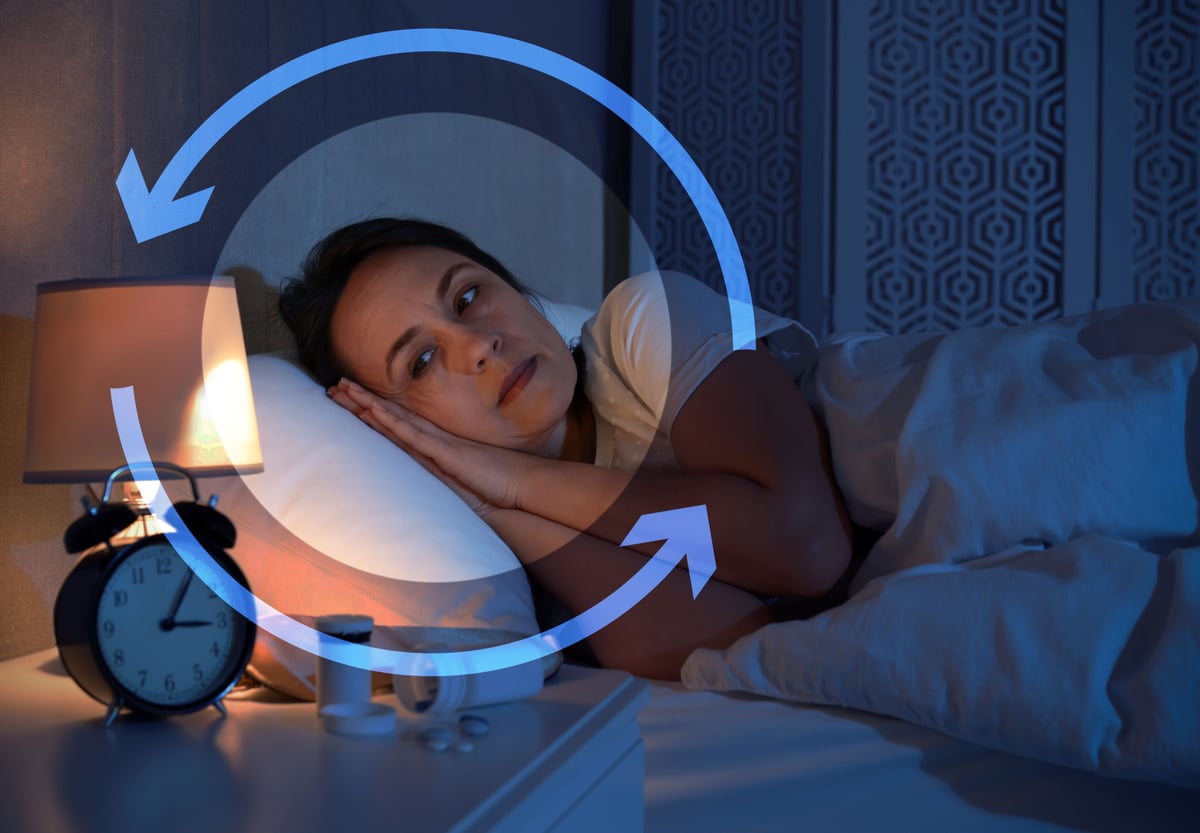
A feedback loop emerges.
Chronic sleep restriction has been associated with increased risk of depression, anxiety disorders, cardiovascular disease, metabolic dysfunction, and cognitive decline (11).
The disruption rarely appears dramatic at first. It begins subtly — irritability, reduced patience, difficulty concentrating.
Over time, it shapes life direction.
Sleep is not a luxury because imbalance is cumulative.
7. The Mattress as the Gateway to Regeneration
Sleep architecture depends not only on biology but also on environment.
The body cannot fully enter slow-wave sleep if:
-
Pressure points trigger micro-arousals.
-
Temperature fluctuates excessively.
-
The spine remains misaligned.
-
Muscle tension persists.
Research shows that supportive sleep surfaces improve sleep efficiency and reduce nocturnal awakenings (12).
A mattress that provides effective pressure redistribution reduces sensory discomfort, allowing the nervous system to disengage more completely.
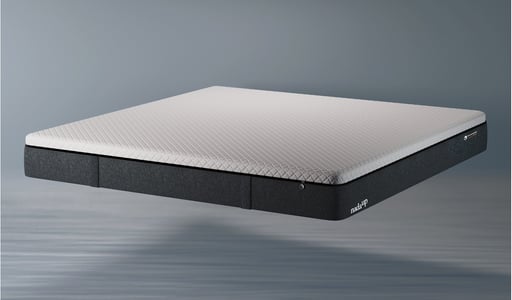
From an environmental physiology perspective, the mattress is not furniture. It is the interface between body and recovery.
Advanced pressure-relieving materials have demonstrated significant improvements in surface cooling and pressure reduction, supporting deeper, more continuous sleep phases
EN NadaUp - Every night Matters…
.
When the body feels physically supported:
-
Muscle guarding decreases.
-
Cortisol declines more readily.
-
Parasympathetic activation strengthens.
-
Sleep cycles complete more consistently.
The physical environment becomes the gateway through which regeneration becomes possible.
Conclusion: The Night as Restoration of Structure
During the day, we adapt to the world.
At night, the body restores itself.
Sleep is the only recurring biological state in which:
-
The nervous system recalibrates.
-
Emotions reorganize.
-
Memory integrates into identity.
-
Hormones resynchronize.
-
Perspective stabilizes.
When all four pillars return to balance, clarity emerges naturally.
The modern challenge is not that humans lack resilience. It is that recovery windows are shrinking.
Sleep remains the most powerful, evidence-based intervention available to restore systemic equilibrium — neurologically, emotionally, hormonally, and cognitively.
And because regeneration depends on both biology and environment, the quality of the physical sleep surface becomes more than comfort — it becomes foundational infrastructure for balance.
Every night, the body is offered a choice: partial recovery or full recalibration.
Only one state allows all four pillars to return to harmony.
That state is sleep.
References
-
Walker, M. (2017). Why We Sleep: Unlocking the Power of Sleep and Dreams. Scribner.
-
Trinder, J., et al. (2001). Autonomic activity during human sleep as a function of time and sleep stage. Journal of Sleep Research, 10(4), 253–264.
-
Yoo, S. S., et al. (2007). The human emotional brain without sleep. Current Biology, 17(20), R877–R878.
-
van der Helm, E., & Walker, M. P. (2009). Overnight therapy? The role of sleep in emotional brain processing. Psychological Bulletin, 135(5), 731–748.
-
Gujar, N., et al. (2011). REM sleep deprivation amplifies reactivity to negative emotional stimuli. Nature Neuroscience, 14(12), 1479–1484.
-
Diekelmann, S., & Born, J. (2010). The memory function of sleep. Nature Reviews Neuroscience, 11(2), 114–126.
-
Wagner, U., et al. (2004). Sleep inspires insight. Nature, 427, 352–355.
-
Leproult, R., et al. (1997). Sleep loss results in elevated cortisol levels the next evening. Journal of Clinical Endocrinology & Metabolism, 82(7), 2466–2470.
-
Spiegel, K., et al. (1999). Impact of sleep debt on metabolic and endocrine function. The Lancet, 354(9188), 1435–1439.
-
Taheri, S., et al. (2004). Short sleep duration is associated with reduced leptin and elevated ghrelin. PLoS Medicine, 1(3), e62.
-
Medic, G., et al. (2017). Short- and long-term health consequences of sleep disruption. Nature and Science of Sleep, 9, 151–161.
-
Jacobson, B. H., et al. (2010). Changes in back pain, sleep quality, and perceived stress after introduction of new bedding systems. Journal of Chiropractic Medicine, 9(1), 1–8.