Why Emotions “Stick” to the Body — and How Sleep Dissolves Them
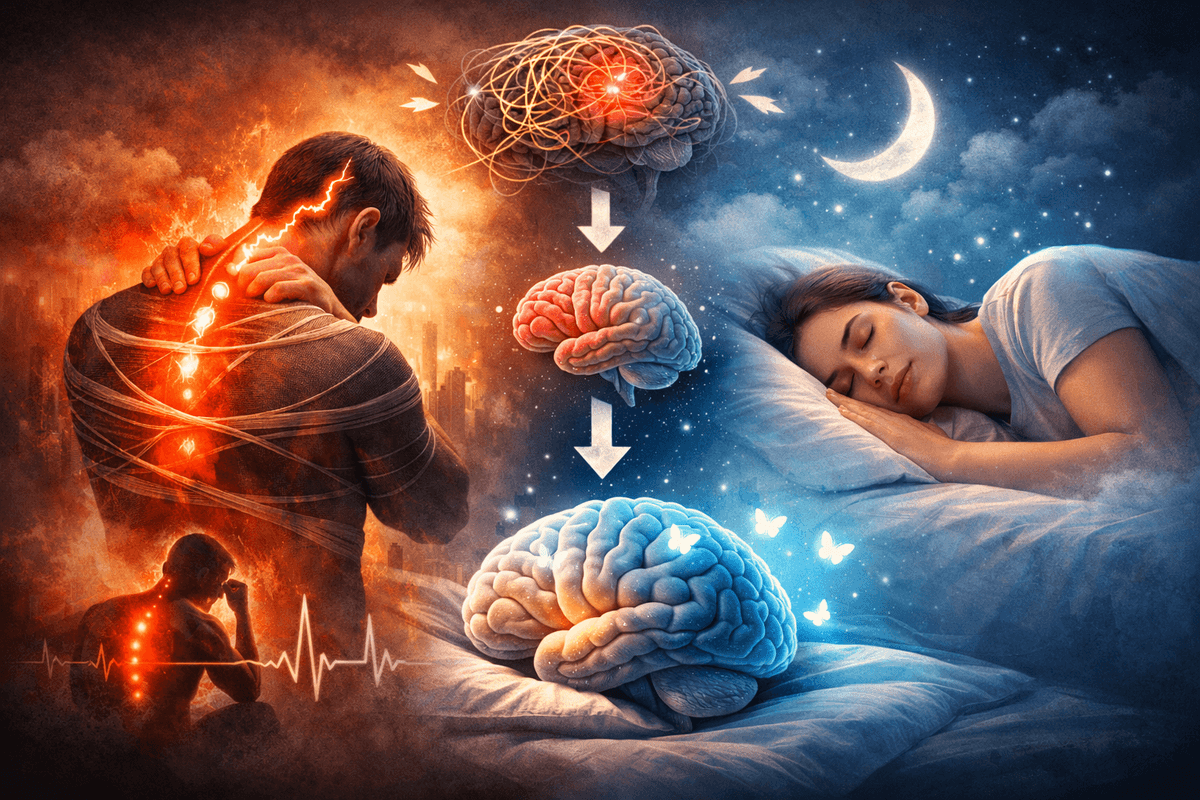
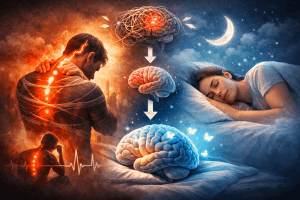
It is common in everyday life to hear people describe emotions as “bottled up,” “heavy,” “in my bones,” or “stuck in my body.” Far from being metaphors alone, these expressions reflect real psychological and physiological processes. Emotions are not just mental phenomena — they can influence body systems, muscular tension, nervous system activation, and even how we sleep. In this blog, we will explore:
- Somatisation of stress
- Fascial tension and nocturnal holding patterns
- How the sleep environment can act as a “mental detox”
- What emotional hypersensitivity looks like after poor sleep
Each section will connect scientific research with clear, generalized examples to help you understand how emotions “stick” and why quality sleep is essential for dissolving them.
1. Somatisation of Stress: When Emotions Become Physical
What is Somatisation?
Somatisation describes the process by which emotional distress or unresolved psychological stress manifests as physical symptoms in the body. This is not imagined or “faked” — the pain, tension, headaches, or fatigue are real and are experienced through bodily systems. Clinically, somatisation is recognized as a way that the body expresses distress that the mind has not fully processed.
How Stress Becomes Somatic Symptoms
Stress triggers the brain’s alarm system — the hypothalamic–pituitary–adrenal (HPA) axis — releasing hormones like cortisol and adrenaline. These hormones prepare the body for “fight or flight,” increasing heart rate, tightening muscles, and shifting blood flow toward survival priorities. If these stress responses are frequent or prolonged, the body remains in a heightened, reactive state. Over time, this chronic stress reaction can lead to physical symptoms such as:
- Tension headaches
- Digestive disturbances
- Chronic pain
- Fatigue
- Muscle stiffness or breath changes
Despite the absence of clear medical causes, these symptoms reflect a deep interplay between the nervous system and body tissues.
Generalized Example: The Office Worker
Imagine a person with a high-pressure job. They frequently worry about deadlines and outcomes, experiencing tension daily. After months of this stress, they begin to notice persistent headaches each afternoon and a nagging lower back stiffness. Visits to different doctors find no medical diagnosis. Their pain is real — but it stems from prolonged emotional stress that their body has “somatised.” This is a classic somatisation pattern: emotional stress turning into physical complaints.
2. Fascia Tension and Nocturnal Holding Patterns
What is Fascia?
Fascia is a continuous network of connective tissue that envelops muscles, nerves, blood vessels, and organs throughout the body. Traditionally considered just structural “packing,” modern research shows fascia is rich with nerve endings and interacts closely with the nervous system.
How Emotional Tension “Holds” in Fascia
When emotional stress activates the nervous system, muscles tighten reflexively. Fascia, intertwined with muscles and deeply innervated, adapts to this tension, becoming less flexible and more rigid. Over time, these altered tension patterns can persist, contributing to:
- Persistent stiffness
- Reduced flexibility
- Chronic muscle discomfort
- Patterns of postural holding
Although some approaches claim fascia “stores emotions,” this concept is best understood as patterns of tension and reflex holding rather than literal memory. Regardless, repeated emotional arousal and muscle tension create habitual “holding patterns” in the body that can feel like emotional residue.
Fascia and Sleep: Nocturnal Holding Patterns
At night, when the body should relax, those habitual tension patterns can persist. Instead of drifting into restorative sleep, the body remains in partial tension — the shoulders stay elevated, the chest stays tight, or the neck stays braced. This is an example of nocturnal holding patterns: muscle and fascial tension that continues into the night, blocking full relaxation. Such patterns make it harder to fall asleep and reduce the depth of sleep.
Generalized Example: The Sleepless Neck Pain
Consider someone who often hunches forward at work while worrying about responsibilities. At night, their neck and shoulders remain tense, making it hard to find a comfortable sleeping position. They wake frequently with discomfort in the same areas — a combination of emotional tension and fascial holding. Though no structural injury exists, their body “remembers” tension through these patterns.
3. How the Sleep Environment Can Act as a “Mental Detox”
Sleep and Emotional Processing
Scientific evidence shows that sleep plays a critical role in emotional processing — encoding, consolidating, and regulating emotional memories experienced during the day. This means sleep does more than rest the body — it helps the brain sort and integrate emotional experiences.
REM sleep, in particular, is associated with processing emotional content and consolidating emotional memories in a way that helps regulate reactions and reduce emotional charge.
Mental Detox During Sleep
Think of sleep as the overnight “cleanup crew” for the brain’s emotional and cognitive load. When sleep quality is good and uninterrupted:
- The brain can modulate emotional intensity
- Neural connections are reorganized
- Stress hormones decline
- Emotional memories integrate into long-term storage
This overnight integration can reduce emotional sensitivity, diminish the intensity of stress responses, and reset the nervous system for the next day. In this sense, the sleep environment — a quiet, safe, cool, comfortable space — becomes a mental detox chamber where emotional pressure is eased and rebalanced.
Generalized Example: Sleep as Reset
Imagine two individuals with the same stressful experience. The first sleeps well — in a quiet, comfortable environment — and wakes feeling less reactive the next day. The second sleeps poorly — in a noisy, uncomfortable room — and wakes with heightened emotional sensitivity. These outcomes show how sleep quality creates dramatic differences in emotional recovery.
4. Emotional Hypersensitivity After Poor Sleep
Sleep Loss and Emotional Regulation
Lack of quality sleep does not merely make you tired — it can amplify emotional reactivity and weaken emotion regulation. Neurobiologically, sleep loss disrupts pathways involving the prefrontal cortex (involved in emotional control) and the amygdala (involved in emotional responses). This imbalance leads to stronger emotional reactions to stressors, reduced coping ability, and heightened sensitivity to daily emotional triggers.
What Emotional Hypersensitivity Looks Like
After poor sleep, emotional hypersensitivity can include:
- Overreacting to minor stressors
- Increased irritability
- Difficulty calming down
- Heightened anxiety
- Emotional exhaustion
These effects are not just experiencing “more emotion” — they reflect diminished neural capacity to regulate responses after disrupted sleep.
Generalized Example: The Overnight Mood Shift
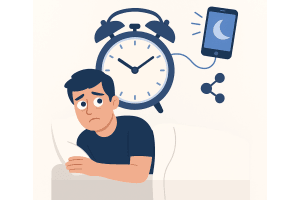
Consider someone who had only four hours of interrupted sleep due to noise or discomfort. The next day, they find themselves unusually reactive: a mild comment feels like criticism, frustration builds faster, and calming down feels harder. Their emotional system is more reactive because poor sleep disrupted the usual neural recalibration processes that dampen stress reactivity.
Conclusion
Emotions and the body are deeply interconnected. Stress can become somatic symptoms, chronic tension patterns can embed in fascia and muscle, and emotional reactivity can intensify with poor sleep. Sleep, when restful and restorative, offers a unique opportunity for emotional processing, regulation, and mental detox.
Understanding how emotions “stick” to the body highlights the importance of both emotional awareness and sleep quality. When emotional experiences are processed — physically through relaxation and mentally through restorative sleep — the body and mind align toward resilience rather than tension.
References
- Tempesta, D., Socci, V., De Gennaro, L., & Ferrara, M. (2019). The role of sleep in emotional processing. In Sleep, Memory and Synaptic Plasticity (pp. 125–170). Springer.
- Yoo, S. S., et al. (2007). The human emotional brain without sleep: a prefrontal-amygdala disconnect. Current Biology.
- Dang-Vu, T. T., et al. (Year). Preferential consolidation of emotional reactivity during sleep: A systematic review and meta-analysis.
- Abdalla, M., et al. (2024). The association between somatization and sleep. Sleep, 47(Supplement_1).
- Somatisation – trauma hidden in physical symptoms. PsycheDoc (2025).
- Somatisation and physical complaints definition. PsychoBlog.com.pl (2025).
- Somatisation – symptoms and somatic manifestations. Widokipsychoterapia.pl (2026).
- Schleip, R. (2005). Active fascial contractility. Medical Hypotheses.
- Fascia as a regulatory system in health and disease. Frontiers in Neurology (2024).
- Fascia: The tensional network of the human body. ScienceDirect (Elsevier).